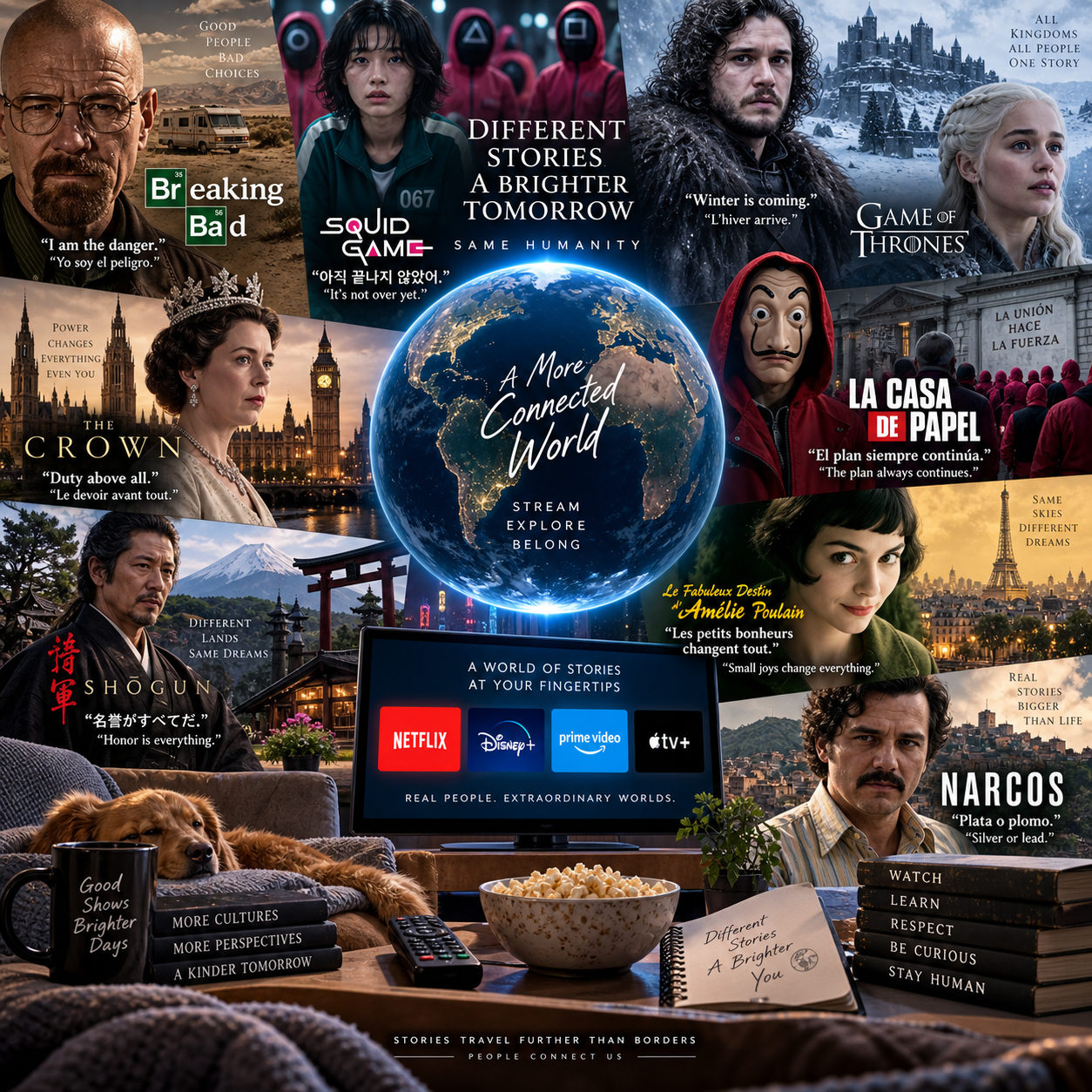
The Impact of COVID-19 on Film and Series Production and Consumption
The COVID-19 pandemic changed the entertainment industry at every stage, from the first day of film production to the moment audiences pressed play. Shutdowns halted shoots, health and safety protocols reshaped set operations, and cinema closures pushed distributors toward streaming platforms and video-on-demand. At home, viewers watched more frequently and began expecting faster, more flexible access to films and television series.
How the Pandemic Disrupted Film and Series Production
COVID-19 disrupted film production and television series production by forcing sets to close, postponing filming schedules, and creating a backlog of unfinished projects. The interruption affected studios, independent producers, broadcasters, performers, and thousands of behind-the-scenes workers.
When infections began spreading internationally, many productions paused with little warning. Some were only days into principal photography; others had already invested months in location scouting, set construction, rehearsals, and visual effects. A shutdown could strand cast and crew, leave expensive locations unused, and make previously agreed schedules impossible.
The disruption also spread beyond live-action filming. Animation teams adjusted to remote work, post-production companies moved editing and sound mixing into home offices, and writers’ rooms adopted digital collaboration. These changes helped some projects continue, but they could not fully replace physical production. A drama requiring large crowds, international locations, or complex stunts faced restrictions that a small animated project did not.
Production delays created a chain reaction. If filming stopped, post-production moved back; if post-production moved back, a broadcaster or streaming platform had to change its release calendar. Networks filled gaps with older programs, unscripted content, limited series, or productions that had completed filming before restrictions began.
New Safety Protocols on Set
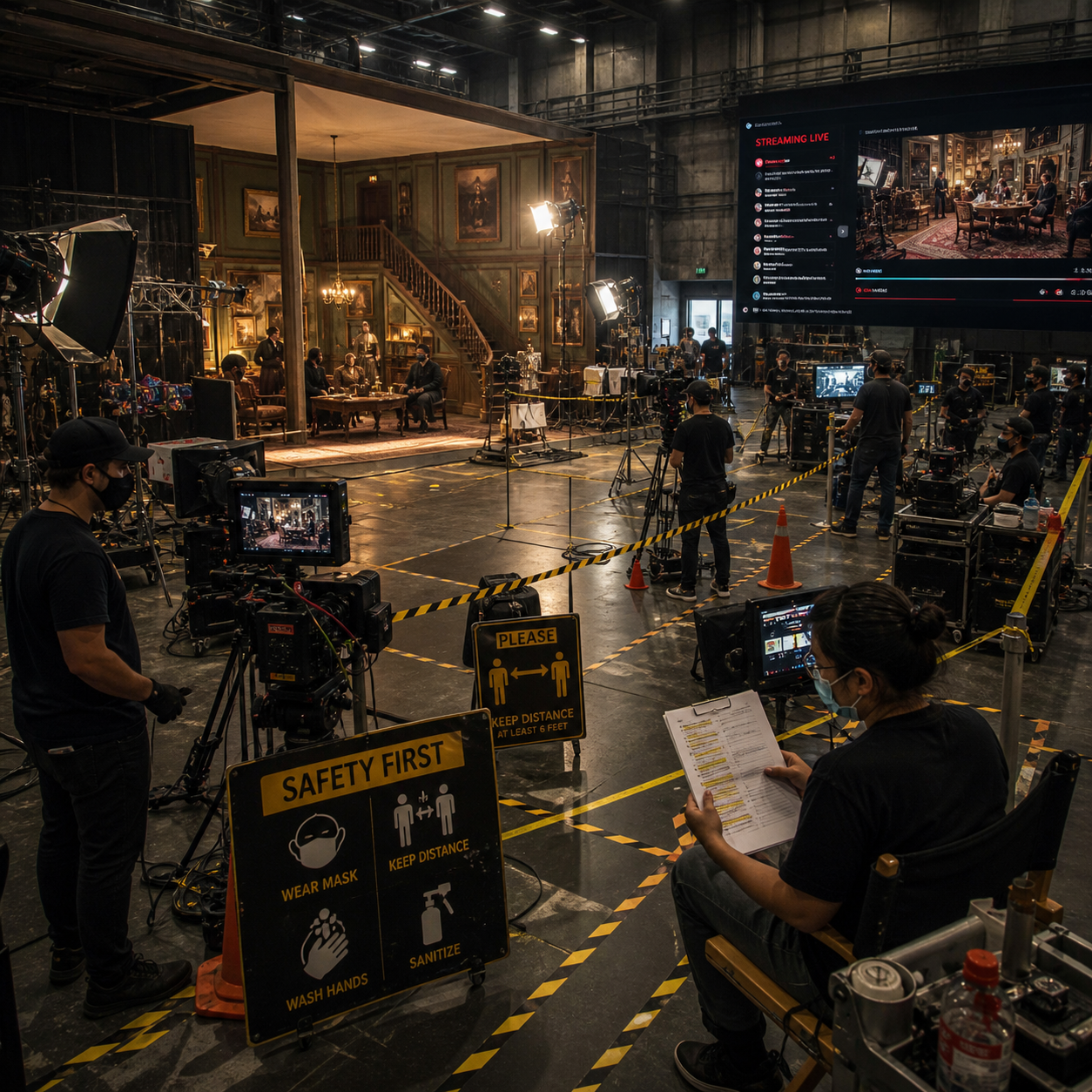
Health and safety protocols made film and series production possible again through testing, controlled access, protective equipment, distancing, and smaller or separated crews. These measures reduced risk, but they also added time, labor, and cost to nearly every shooting day.
Protocols varied by country, production company, union agreement, and local conditions. Common measures included:
- Regular COVID-19 testing for cast and crew.
- Temperature checks, symptom screening, and restricted access to sets.
- Masks and personal protective equipment for workers who were not on camera.
- Distancing rules in wardrobe, makeup, catering, rehearsal, and transport.
- Smaller departments, staggered call times, and separate production zones.
- Additional cleaning, ventilation, contact tracing, and contingency planning.
These requirements changed the rhythm of a set. Scenes involving physical intimacy, crowds, singing, or close contact required extra preparation. A production might schedule fewer setups per day because moving actors and crew safely took longer. Makeup artists and costume departments also had to revise established routines.
The financial trade-off was direct: choosing stricter controls for safer working conditions meant accepting more overhead and less flexibility. Producers had to budget for testing, safety supervisors, substitute performers, insurance complications, and possible shutdowns. Protocols could lower transmission risk, but they could not guarantee that a production would avoid interruption.
Delays, Costs, and Creative Consequences
Production delays and cancellations increased costs while forcing writers, directors, and producers to rethink schedules, locations, cast availability, and sometimes the stories themselves. The effects reached far beyond a postponed premiere.
A delayed production can lose access to a location, miss a seasonal setting, or find that an actor is no longer available. Young performers may visibly age between episodes, while weather-dependent scenes may require expensive reconstruction. Reshoots also became harder to organize because cast and crew calendars were already crowded.
Financial pressure encouraged more careful planning. Producers increasingly divided projects into phases, created backup schedules, and designed scenes with practical restrictions in mind. Large crowd sequences could be rewritten, filmed with fewer performers, or completed with digital effects. Some productions reduced location changes because every additional site introduced transport, permitting, and health-management challenges.
There were creative consequences, although they differed by genre. A thriller set in a limited number of rooms could adapt more easily than a historical epic. Television writers sometimes reduced the number of characters in a scene or used remote communication as part of the story. Such decisions could produce tighter drama, but they might also make a world feel smaller.
The pandemic therefore exposed a planning principle that remains useful: a resilient production is designed with alternatives. Backup locations, flexible schedules, remote post-production systems, and clear decision-making authority can protect a project when conditions change.
The Shift from Theaters to Streaming
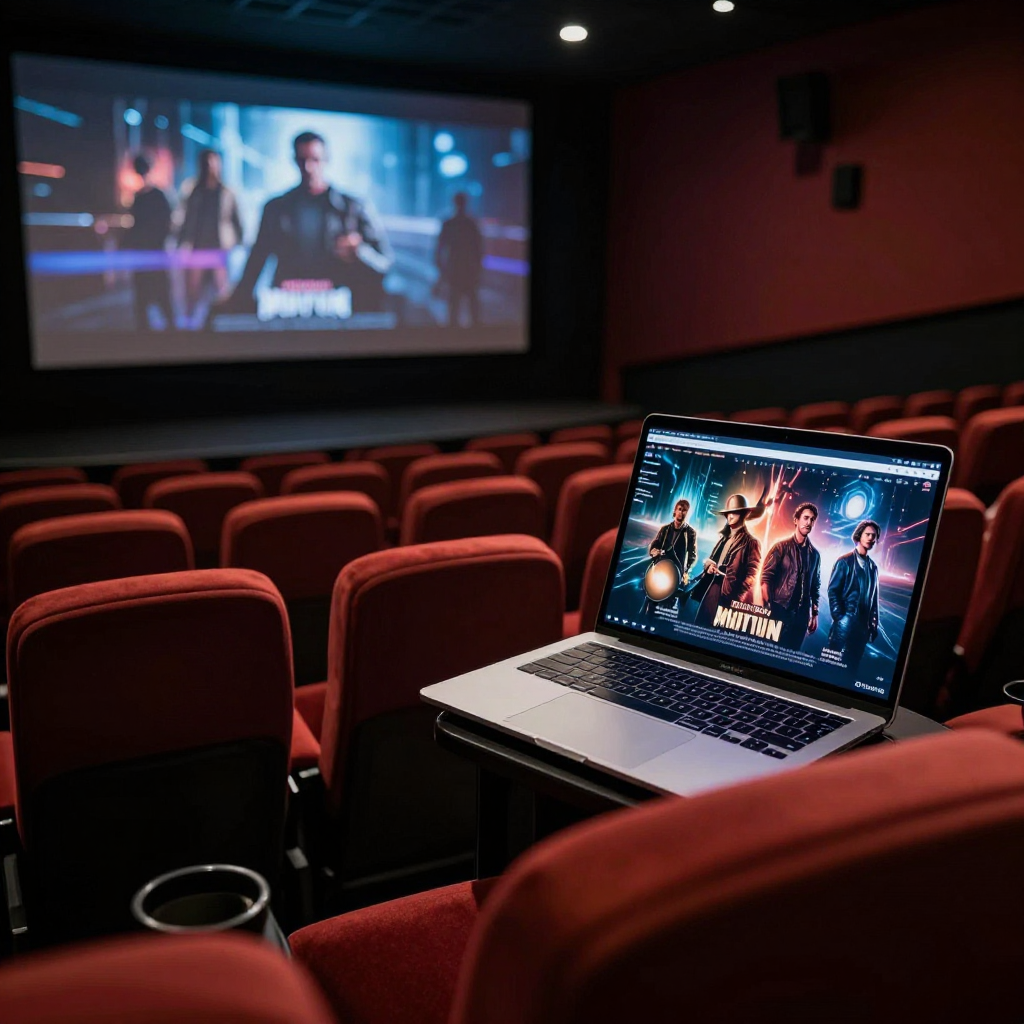
The closure of movie theaters accelerated the shift from theatrical releases to streaming platforms and video-on-demand. With cinemas unavailable or operating at limited capacity, distributors postponed major releases, released selected films digitally, or tested shorter theatrical windows.
The traditional path often involved an exclusive cinema period before a film reached home entertainment. During the pandemic, that sequence became less predictable. Some films moved directly to premium video-on-demand, while others appeared simultaneously in theaters and on a streaming service, depending on the studio, market, and title.
This change offered convenience and a potential revenue source during cinema closures. Families could watch a new release at home without waiting months. Distributors also gained direct information about digital engagement, subscriptions, rentals, and viewing completion.
However, digital access brought trade-offs. A home release could weaken the communal spectacle of a cinema and make it harder for theaters to recover fixed costs. Viewers might delay a rental, share access, or wait for a subscription release. Studios also had to balance short-term availability against the long-term value of theatrical exclusivity.
Theatrical releases did not disappear. Movie theaters remained important for event films, premium formats, social experiences, and titles designed around a large screen and powerful sound. The more lasting change was flexibility: distributors became more willing to treat the cinema, the television, and the mobile device as connected parts of one release strategy.
How COVID-19 Changed Audience Consumption
COVID-19 changed audience viewing habits by increasing at-home viewing, encouraging subscription use, and making binge-watching and on-demand access central to everyday entertainment. Viewers gained more control over when, where, and how they watched films and series.
With people spending more time indoors, television series became a routine rather than an occasional activity. Entire seasons could be watched over a weekend, while recommendation algorithms helped viewers move quickly from one program to another. Streaming platforms benefited from this convenience, although the abundance of choice also created subscription fatigue and decision overload.
Release expectations changed as well. Audiences became more familiar with weekly drops, full-season releases, premium rentals, delayed theatrical windows, and platform-exclusive titles. A viewer might reasonably ask whether a film was worth a cinema ticket if it would arrive at home shortly afterward.
Content demand shifted in several directions. Escapist entertainment offered relief from stressful news, while documentaries, familiar franchises, reality programming, and shorter series provided accessible viewing options. Audiences also became more tolerant of productions made under unusual circumstances, including limited locations and smaller ensembles, when the storytelling remained strong.
At-home viewing was not equally convenient for everyone. Household internet quality, device access, subscription prices, privacy, and living space shaped the experience. Streaming expanded choice, but it did not remove economic or technological barriers. The same release could feel liberating to one household and inaccessible to another.
The Long-Term Impact on Film and Television
The long-term impact of COVID-19 includes more flexible release strategies, stronger remote workflows, and permanent attention to production resilience, while movie theaters and traditional broadcast television continue to serve distinct audiences.
Streaming services are likely to remain central because they combine distribution, audience data, international reach, and recurring subscription revenue. Yet their growth does not guarantee unlimited spending. Platforms still face pressure to control production budgets, reduce subscriber churn, and choose projects with a clear audience.
Hybrid distribution may remain common for selected films. A major franchise could receive a theatrical event, while a smaller film might benefit from a direct video-on-demand launch. The right approach depends on genre, budget, audience geography, marketing capacity, and the health of local cinemas.
Production practices may also remain more flexible. Remote editing, cloud-based review, digital casting, and virtual meetings can reduce travel and speed up approvals. The limitation is that creative collaboration often depends on physical presence, and remote systems require reliable technology, cybersecurity, and training.
The strongest lasting lesson is operational rather than technological. Companies need realistic contingency budgets, transparent communication, and schedules that do not assume every department can absorb another delay. Resilience is now part of production design.
What the Pandemic Revealed About the Entertainment Industry
The pandemic revealed that the entertainment industry depends on a tightly connected system in which production, distribution, technology, labor, and audience behavior can disrupt one another. It also showed that viewers will adopt new habits quickly when access and circumstances change.
Film production and television series production rely on international travel, specialized crews, equipment suppliers, insurers, locations, and post-production facilities. A problem in one link can affect a release months later. The crisis made that dependence visible to audiences who normally see only the finished screen product.
It also strengthened the relationship between creators, distributors, and platforms. Streaming services could offer reach and convenience, but creators and workers still needed fair contracts, safe conditions, and sustainable schedules. Technology solved some logistical problems; it did not eliminate the human labor behind every film or series.
For audiences, the central change was choice. Viewers now expect several legitimate ways to watch: in a movie theater, through video-on-demand, on a streaming platform, or through traditional television. That choice will continue to shape release strategies, but the cinema experience retains value when a film is built as a shared event.
COVID-19 did not create every trend in modern entertainment. It accelerated existing movements and forced the industry to test them at scale. The result is a more flexible but also more complicated ecosystem, one where successful films and series must navigate production uncertainty, fragmented distribution, and rapidly changing audience expectations.
Frequently Asked Questions
How did COVID-19 affect film production?
COVID-19 caused shutdowns, postponed shoots, production cancellations, and major scheduling backlogs. When filming resumed, testing, distancing, protective equipment, smaller crews, and contingency planning changed both workflows and budgets.
Why did streaming become more important during the pandemic?
Streaming became more important because cinema closures limited theatrical access while audiences spent more time at home. Platforms provided immediate, convenient access to films and television series through subscriptions and video-on-demand.
Did COVID-19 change movie release strategies?
Yes. Distributors tested shorter theatrical windows, simultaneous cinema and streaming releases, and direct premium video-on-demand launches. The exact strategy varied by title, territory, platform, and theater availability.
How did audience viewing habits change?
Audiences watched more content at home, used streaming subscriptions more frequently, binge-watched complete seasons, and became accustomed to flexible release schedules. They also became more selective about which services they continued paying for.
Which pandemic-related changes may continue in film and television?
Hybrid distribution, remote post-production, digital collaboration, flexible scheduling, and stronger health planning may continue. Movie theaters will remain relevant, especially for event films and social viewing, while streaming will remain a major route to audiences.