

Behind the Scenes: How Streaming Algorithms Recommend Your Next Favorite Show
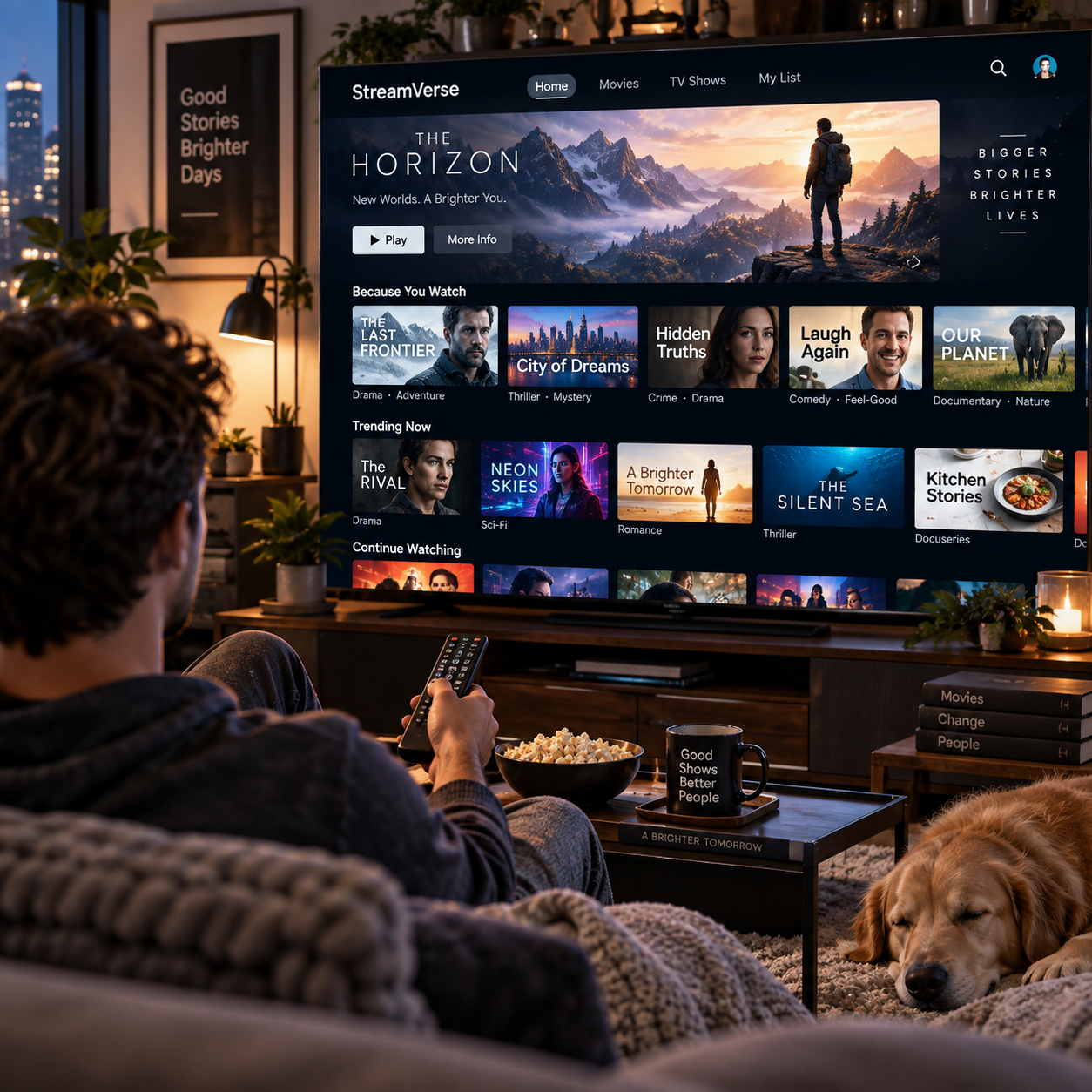
Open a streaming app and you may see a new crime drama beside a familiar sitcom, followed by a documentary you had not considered. Those rows are shaped by streaming recommendation algorithms: systems that sort a large catalog into suggestions they expect you might want to watch. They use clues from your activity and from the shows and movies themselves, but they do not know your taste perfectly.
Understanding the process helps explain why a recommendation can feel uncannily right one night and strangely repetitive the next. It also gives you practical ways to guide what appears on your screen.
What a streaming recommendation algorithm does
A streaming recommendation algorithm ranks titles in a platform’s library to create a personalized selection for each viewer. It helps narrow thousands of possible shows and movies into recommendation rows and feeds that are easier to browse.
The system may estimate which titles you are likely to start, finish, or enjoy, then decide how to arrange them. A row labeled around a genre or mood can combine titles chosen for different reasons: your viewing history, similarities between programs, recent popularity, or editorial decisions. The exact mix varies by service, and platforms do not all use the same methods.
Think of a recommendation as a prediction, not a verdict. A crime-series suggestion might reflect your history of watching mysteries, the show’s metadata, and the behavior of viewers with similar patterns. That prediction can save browsing time, but it can also keep bringing you back to familiar territory.
The signals that shape your recommendations
Streaming services can use viewing, browsing, and feedback signals to estimate what you might watch next. The strength and availability of each signal depend on the platform, your settings, and how you use the service.
Viewing history is one of the clearest clues. Watching several episodes of a period drama may signal interest in that kind of series. Watch time and completion can add context: finishing a film may suggest stronger interest than opening it and leaving after a few minutes. Still, finishing a title is not a guaranteed endorsement. You may have watched it for a different reason, or simply left it playing.
Search and browsing behavior can matter, too. Searching for an actor, opening a show’s details page, or browsing a row without choosing anything may indicate curiosity. These actions are less conclusive than watching, so a platform may treat them as weaker signals.
Ratings and likes provide more direct feedback where a service offers them. A thumbs-up on a comedy tells the system something different from an abandoned thriller. Watchlists can also show intent, though adding a title does not guarantee you will play it. Some services let you remove items from viewing history or mark that you are not interested; those controls can correct signals that no longer represent you.
Platforms may also consider the time, device, or profile associated with activity, subject to their own practices and settings. These details do not mean every service tracks every action in the same way. Check the service’s privacy and account controls for platform-specific information.
How platforms match viewers with shows and movies
Platforms match viewers with shows and movies by combining clues about a viewer’s preferences with information about each title. Similarity, personalization, and viewing patterns can all contribute to a suggestion.
Content metadata gives a service a structured description of its catalog. Depending on the platform, metadata may include genre, cast, language, release period, themes, episode length, and other attributes. If you watch several slow-burn mysteries, the system may surface a new series with related genre or story features—even if it is not widely watched.
Another approach looks for patterns among viewers. If people who watch one film often go on to watch a particular series, the service may recommend that series to someone with a similar viewing pattern. This does not mean you and those viewers share every taste; the overlap may be limited to a few titles or behaviors.
These signals can work together. Imagine you finish a courtroom drama, search for one of its actors, and rate it highly. The service could use that activity, the show’s metadata, and broader viewing patterns to rank legal dramas or other titles featuring the actor. The result may appear in a recommendation row, a personalized feed, or a category page.
Human curation can be part of the picture. Editors may assemble collections or highlight titles for a season, event, or audience. Algorithms can still personalize how those titles are ordered or which collection you see. Choosing a human-curated collection may offer more variety, while a tightly personalized row can be faster to scan but narrower.
Why recommendations change over time
Recommendations change as a platform receives new signals and your viewing patterns shift. Recent activity can influence what appears alongside older preferences, so a feed is rarely a fixed portrait of your taste.
Suppose you usually watch sitcoms but spend a week streaming nature documentaries. The service may begin testing more documentaries in your rows. If you keep watching them, that interest may appear more strongly; if you return to comedies, the balance may shift again. A single search or brief viewing session may have less influence than a consistent pattern, though platforms differ.
New releases and changes to a service’s catalog can also alter what is available to recommend. A title may rise because it has become popular, or disappear because it is no longer streaming. Recommendations can therefore reflect both your activity and what the service can currently offer.
This updating process is useful when your mood or interests change. The trade-off is that a short-lived curiosity can temporarily crowd out other genres. If a documentary binge was a one-off, a profile control or a few deliberate choices can help the feed rebalance.
Why the suggestions sometimes miss
Recommendations miss when the available signals are incomplete, misleading, or attached to the wrong viewer. A personalized feed is built from patterns, and patterns do not capture every reason behind a viewing choice.
- Limited data: A new profile has little history, so the service may lean more on popular titles or broad preferences until it learns more.
- Shared profiles: If several people watch on one profile, a child’s animated series, a partner’s crime show, and your own comedy picks can blend into a confusing feed.
- Changing tastes: Past activity can remain influential after you have moved on from a genre or type of story.
- Repetition: Systems often return to proven similarities because familiar patterns are easier to predict than a viewer’s interest in something new.
Popularity can help a platform surface titles many viewers are choosing, but it may also make a niche film harder to find. A show can be a strong fit for you and still be buried if it has little viewing data. Conversely, a popular series is not automatically a personal match.
When a suggestion feels wrong, ask what signal might have caused it: a shared profile, an accidental play, a search, or a title you finished out of obligation. That question points to a useful correction instead of treating the algorithm as if it can read your mind.
How to get better recommendations
To improve recommendations, use separate viewing profiles, give clear feedback, and remove activity that no longer reflects your taste. A few consistent adjustments usually provide better guidance than repeatedly opening titles you do not want to watch.
- Use individual viewing profiles. Keep household members’ histories separate where possible. This reduces mixed signals and makes rows more relevant to each person.
- Rate titles when the service offers it. Likes, dislikes, or equivalent controls tell the platform more than passive browsing does. Use them for shows you genuinely enjoyed or disliked.
- Manage viewing history. If an accidental start or someone else’s viewing appears in your history, remove it if the platform provides that option. This can help prevent one misleading event from shaping future rows.
- Use the watchlist with intention. Add titles you genuinely plan to watch, then remove old entries that no longer interest you. Watchlists communicate interest, but they are not a substitute for direct ratings.
- Explore deliberately when you want variety. Search for a genre you rarely watch, browse a curated collection, or choose a film outside your usual pattern. This may help broaden future suggestions, though the effect is not guaranteed.
Do not confuse a more accurate feed with a better one for every occasion. If you want familiar comfort viewing, personalization can be efficient. If you want discovery, it may help to browse outside the personalized rows and seek out human-curated collections. You can also review the platform’s profile and history settings; available controls differ by service.
Frequently asked questions
Do streaming services track everything I watch?
Services generally use activity within their platforms to operate features such as viewing history and recommendations, but the specific data collected and how it is used vary. Review the service’s privacy policy and account settings for accurate details about that platform.
Why do different profiles get different recommendations?
Each profile can build its own viewing history, ratings, and browsing patterns. Keeping profiles separate helps the service distinguish one person’s preferences from another’s.
Can I reset or improve my recommendations?
Many services offer controls such as clearing or removing viewing history, adjusting profile settings, or giving title feedback. The options vary, so check your account settings. To improve suggestions without a full reset, use a separate profile and give consistent ratings or likes.
Do popular shows appear more often than niche titles?
They can, especially when a service uses popularity or recent viewing activity as one of its signals. But a platform may also recommend niche titles based on metadata or similarities to your viewing history. Popularity is one possible influence, not a universal rule.